Do You Need an Airbnb Hosting Assistant in Tampa—or a Full Manager?

Introduction
Tampa owners usually don’t need more theory. They need to know who’s answering the guest who can’t find the lockbox code, who’s chasing the cleaner that’s running late, and who’s fixing the calendar when a booking overlaps a turnover. That’s the real decision behind Airbnb hosting assistant vs property manager in Tampa. If your listing is active, the work shows up fast, in messages, cleanings, access issues, and the next guest’s arrival. So the question isn’t whether you need help. It’s how much of the operation you want to keep on your plate.
This article will clarify the distinct roles of an Airbnb hosting assistant and a full property manager, helping you understand which level of support aligns with your ownership style and investment goals. We’ll look at Tampa-specific situations, from owners who live elsewhere part of the year to people managing a few units, so you can choose a setup that matches the work actually sitting in front of you.
Airbnb Hosting Assistant: Empowering Self-Management
An Airbnb hosting assistant, often called a co-host, handles the recurring work that keeps a short-term rental moving while you stay in control of the listing. In practice, that means guest messages, cleaner coordination, check-in details, and the small fixes that pop up between bookings. It’s direct support, not a takeover. You still make the bigger calls, but you’re no longer the one carrying every late-night question, turnover delay, or supply run.

Key Responsibilities of an Airbnb Hosting Assistant
Co-hosts typically handle the day-to-day tasks that keep your property moving. Those usually include:
- Guest Communication: Responding to inquiries, sending check-in instructions, answering questions during a stay, and following up after checkout. This includes booking requests and reservation confirmations.
- Cleaning and Turnover Coordination: Scheduling cleaners, checking that turnovers happened on time, and following up if something was missed before the next guest arrives.
- Supply Restocking: Replacing toiletries, paper goods, coffee, trash bags, and the other basics that tend to run low between stays.
- Minor Issue Resolution: Handling the small stuff, like a guest who can’t connect to Wi-Fi, a smart lock that needs a reset, or a missing towel request late at night.
- Calendar Updates & Basic Listing Management: Keeping availability current and making small listing updates when needed.
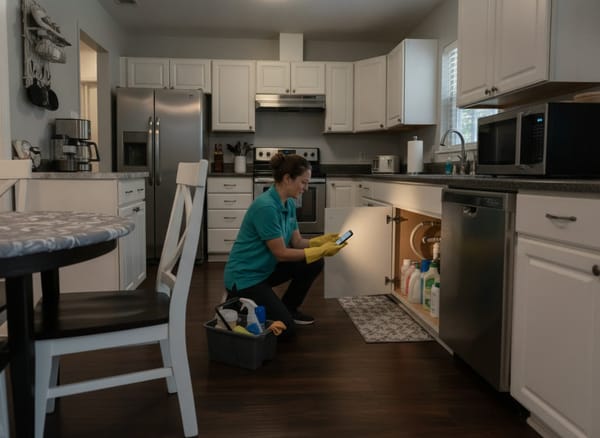
On a busy turnover day, this is the part that saves your sanity. A cleaner texts that they’re running 20 minutes behind, a guest wants early baggage drop-off, and the lock battery starts acting up all at once. A good co-host keeps those pieces moving so you’re not the one juggling every little thing from your phone.
With an Airbnb hosting assistant, you keep the bigger decisions in your hands while someone else handles the routine work that needs quick follow-through. That can be a good fit if you want to stay close to the business but don’t want every guest message, turnover, and supply run landing on you.
Full-Service Airbnb Property Management: The Hands-Off Approach
For owners who don’t want to stay involved in the day-to-day, full-service Airbnb property management takes over the operating side of the listing. In practice, that means the manager becomes the main point of contact for guests, handles the messaging, coordinates cleaners and maintenance, and keeps the listing moving without you chasing every detail. The tradeoff is straightforward: less control for you, more responsibility shifted to the manager.
Comprehensive Scope of Full-Service Management
Full-service managers usually cover a wide range of responsibilities, including:
- Listing Optimization and Marketing: Creating listings with professional photos, writing the description, and placing the property on platforms like Airbnb, Vrbo, and Booking.com.
- Dynamic Pricing Strategies: Adjusting rates based on season, local events, competitor rates, and booking lead times.
- Guest Communication and Support: Handling guest inquiries, bookings, check-ins, and check-outs, plus support during a stay.
- Cleaning and Maintenance: Coordinating professional cleaning, doing routine maintenance checks, and handling repairs.
- Financial Management: Collecting payments, managing expenses, handling taxes, and sending regular financial reports to owners.
- Legal Compliance: Keeping the property aligned with local rules, licensing requirements, and safety standards in Florida.
What changes day to day is simple: you stop being the person who has to stitch the operation together. The manager takes the messages, watches the turnover timing, follows up on maintenance, and sends you the numbers after the work is done. If you’re tired of being the last stop for every guest issue, that difference matters.
With full-service management, the owner usually steps back from the operating rhythm and gets a cleaner reporting process instead of handling the work directly. That can make sense if your priority is to stop living inside the weekly back-and-forth and let one team carry the property from booking to checkout.
Tampa-Specific Use Cases: Who Needs What?
Tampa’s short-term rental market tends to reward owners who know how much hands-on work they actually want to carry. Different travel patterns create different operating rhythms, so the same support model won’t fit every owner. If you’re comparing Airbnb co-host Tampa support with full property management, it helps to look at how each setup plays out in real situations.
Snowbird Owners: Managing from Afar with Ease
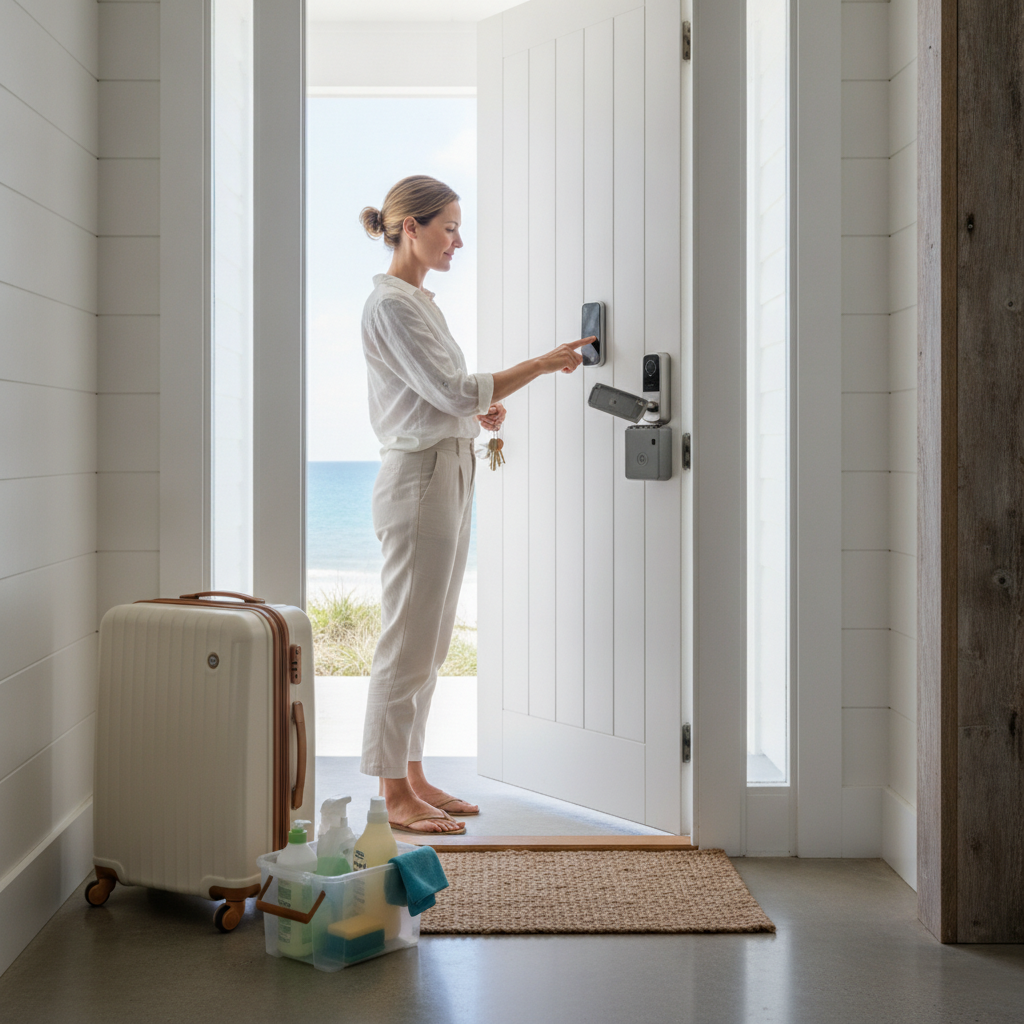
For a Tampa owner who spends part of the year elsewhere, the problem is usually simple: the property still needs local attention when you’re not there. In that use case, an Airbnb hosting assistant can handle the on-the-ground jobs, cleaner coordination, guest lockouts, maintenance follow-up, and turnover checks, while you stay informed without having to run back and forth from another state. That keeps the listing covered without turning every issue into your personal errand.
Remote Investors: Balancing Oversight and Delegation
For a remote owner with Tampa Bay units, the real question is how much oversight you want to keep versus how much of the operation you want off your desk. In that scenario, an Airbnb hosting assistant can cover guest messaging, turnover coordination, and local follow-up while you keep pricing, capital decisions, and larger business choices. If you want the whole operating load gone, a full property manager is the cleaner fit because they take over the day-to-day work instead of just helping with it.
Multi-Unit Operators & Portfolio-Level Owners: Systematized Operations
For portfolio-level owners and operators, the need shifts from basic help to repeatable execution. At that point, Airbnb hosting assistants can still be useful, but only when the tasks are clearly defined. In practice, that might look like:
- Turnover Verification: Using a checklist to confirm a unit is ready after each guest departure.
- Vendor Scorecards: Noting how a cleaner or maintenance vendor handled a specific job.
- Access Registries: Keeping guest access codes current for smart locks across multiple properties.
- Property Knowledge Bases: Maintaining notes for each unit, such as lock instructions, appliance quirks, and vendor contacts.
- Owner Reporting Support: Pulling together notes on guest issues, maintenance requests, or turnover misses for the owner or manager to review.
In that setting, the assistant is part of the operating system, not a replacement for it. The point is to keep each unit moving with less guesswork when one person is trying to manage more than one property at once.
Airbnb Assistant vs. Property Manager: A Detailed Comparison
The main difference between an Airbnb hosting assistant and a full property manager is how much of the business they actually run for you. A co-host helps with execution. A property manager takes over the operating side of the listing. If you’re comparing Airbnb assistant vs property manager options in Tampa, the cleanest way to look at them is by control, workload, and how much of the day-to-day stays on your plate.
| Feature | Airbnb Hosting Assistant (Co-Host) | Full Property Manager |
|---|---|---|
| Responsibilities | Day-to-day operations, guest communication, cleaning coordination, minor issue resolution, supply restocking. | Comprehensive: marketing, pricing, bookings, guest support, maintenance, legal compliance, financial reporting. |
| Owner Involvement | High to Medium: Owner keeps strategic control (pricing, marketing, major decisions). | Low to None: Owner delegates most operational and strategic decisions. |
| Control of Listing Profile | Often stays under the owner’s profile; reviews and Superhost status usually stay with the account that holds the listing. | Often tied to the manager’s business setup, depending on how the account structure is arranged. |
| Cost Structure (Typical) | Usually tied to the tasks handled: messaging, turnover coordination, and local issue follow-up. | Usually tied to the full operating scope: marketing, pricing, guest support, maintenance, and reporting. |
| Financial Handling | Owner often keeps payout control; co-host may be paid separately or through a split arrangement. | Manager may handle guest payments and expenses before sending proceeds to the owner. |
| Scalability for Owner | Useful when the owner still wants oversight and direct input. | Useful when the owner wants to step back from daily operations. |
| Ideal For | Active owners, those needing specific task outsourcing, new hosts, or those with a few properties. | Passive investors, owners with multiple properties, those seeking hands-off management, or more complex operating setups. |
As the table shows, a co-host works inside the owner’s setup and helps carry the workload without taking over the whole business. That can be a better fit if you want support without giving up the direct relationship with the listing. A property manager, on the other hand, is the better fit when you want someone else to run the operation end to end.
Choosing Your Path: Factors to Consider for Your Tampa STR
Deciding between an Airbnb hosting assistant and a full property manager in Tampa comes down to how much you want to handle yourself, what kind of workload your property creates, and how much control you want to keep. There isn’t one hard rule that fits every owner, but there are patterns that can help you choose the right setup.
Your Time Availability and Desired Involvement
- High Involvement (Self-Manage with Support): If you like staying involved in pricing, guest messaging, and the overall direction of the listing, but need help with repetitive tasks, an Airbnb hosting assistant is a strong fit. You stay close to the business and delegate the work that keeps piling up.
- Low Involvement (Passive Investor): If you want to stay out of daily operations and only check in on results, a full property manager makes more sense. They take on the work that would otherwise pull you back into the listing every week.
Your Budget and Financial Goals
- Cost-Conscious / Specific Task Outsourcing: Airbnb assistants cost less because they handle a narrower job. If your real pain point is messaging, turnovers, or access issues, paying for those tasks alone can be the cleanest move.
- Value of Time / Comprehensive Service: Full property managers cost more because they take on more of the operation. If you’re losing hours each week to guest issues, cleaner follow-up, and calendar changes, the extra spend may be easier to justify than the time you’re getting back.
Number of Units in Your Portfolio
- 1-3 Units: For owners with a few units, an Airbnb hosting assistant can handle the operational load while you keep more personal control. In practice, that can feel like the right balance when you still want to see what’s happening.
- Multiple Units / Scaling Portfolio: As your portfolio grows, the day-to-day work gets harder to keep in your head. For some owners, that’s the point where a full property manager or a tightly run assistant team starts to make more sense because there are more turnovers, more messages, and more moving parts to keep straight.

Your Specific Operational Pain Points
Identify what parts of hosting actually drain you. Is it late-night guest messages? Coordinating cleanings after every stay? Dealing with maintenance requests? An Airbnb hosting assistant can target those specific problems directly. If the stress comes from the full mix of operations, marketing, and compliance, then a full property manager is the cleaner fit.
Optimizing Your Airbnb Operations with the Right Support
No matter which path you choose, the goal is the same: keep the property running smoothly without creating more work for yourself. The best support setup is the one that makes the day-to-day clearer, faster, and easier to manage.
Clear Communication is Paramount
Set the rules early. If you’re working with an assistant, spell out exactly who replies to guest messages, who schedules cleanings, who handles supplies, and when you expect updates. If you’re using a property manager, ask what happens after hours, how they handle urgent issues, and how often you’ll get reporting. For Tampa owners, that might mean same-day guest replies in some situations, turnover confirmations once the cleaning is done, and a weekly check-in that covers open issues.
Leverage Technology
Use simple tools that reduce back-and-forth instead of adding more of it. Keep one shared calendar for bookings and turnarounds, use a task app for cleaner handoffs, and make sure lock codes, guest messages, and maintenance notes live in one place. If you already use pricing software or a property management system, make sure the person running the property knows the actual workflow: calendar updates, task handoffs, cleaner check-ins, lock codes, and guest messaging.
Define Performance Metrics
Track the internal KPIs that tell you whether the setup is working: guest response time, turnover completion, review quality, and how often you’re being pulled in to solve problems. If you’re managing more than one unit, review those numbers on a set rhythm that fits your own operation so you can spot issues before they turn into lost bookings.
Conclusion
If you want to stay involved and just need help with the daily work, an Airbnb hosting assistant is usually the better fit. If you want to step out of the operation entirely, a full property manager makes more sense. For Tampa owners, the simplest test is this: if you still want to make the key decisions yourself, keep control and add support. If you want someone else to run the listing day to day, hand it off. The right choice is the one that matches your real workload, not the one that sounds neat on paper.
Frequently Asked Questions
What is the typical cost difference between an Airbnb assistant and a full property manager in Tampa?
Airbnb hosting assistants, also called co-hosts, usually cost less because they handle a narrower slice of the work. Full-service property managers cost more because they take on the full operating load. The exact pricing depends on the scope of service, the property, and the provider, so it’s better to compare quotes based on what each one actually does.
Can an Airbnb assistant help with dynamic pricing strategies?
Sometimes, but usually in a limited way. An assistant may help apply pricing changes or update the calendar, but the actual pricing strategy often stays with the owner, a pricing tool, or a full property manager.
How do I find a reliable Airbnb hosting assistant in Tampa?
Look for someone who has handled short-term rental tasks before and can explain their process clearly. Airbnb’s co-host options, local real estate circles, Tampa Bay vacation rental groups, and freelance platforms can all be places to start. Ask how they handle guest messages, cleanings, and urgent issues before you hire them.
Is an Airbnb assistant legally considered a co-host on the platform?
Yes. On Airbnb, the role is generally called a co-host. The owner can add that person to help manage day-to-day tasks like guest communication, cleaning coordination, and other operational work.
What tasks are generally NOT handled by an Airbnb hosting assistant?
A hosting assistant usually doesn’t run the whole business. They typically do not set long-term pricing strategy, manage taxes, handle the owner’s payout account, run broad multi-platform marketing, or make major capital decisions. Those tasks are usually left to the owner or a full property manager.